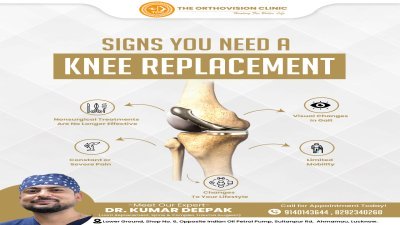
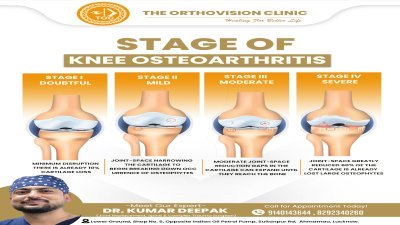
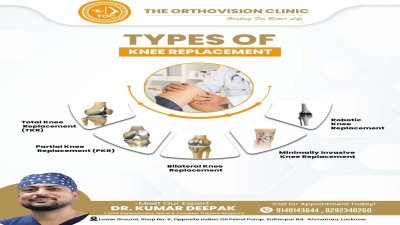
Total knee replacement has been one of the most successful orthopaedic surgeries ever performed.
As people live longer and seek painless mobility throughout life, the number of primary joint replacement procedures has increased exponentially over the past decade. Revision Joint Replacement: An Emerging ChallengeRevision joint replacement is becoming increasingly common and deserves focused attention.
Earlier, it was believed that once a joint failed, little could be done
Earlier, it was believed that once a joint failed, little could be done. Today, advancements in surgical techniques, implant design, and expertise allow failed joints to be successfully salvaged, provided they are diagnosed in time.
Common Causes of Joint Replacement FailureFailure of a well-performed joint replacement may occur due to:InfectionAseptic loosening (gradual loosening over time)InstabilityTraumaAmong these, infection and aseptic loosening are the most significant causes and require timely management.
Early Signs of Implant FailureSymptoms that may indicate joint failure include:Pain on startupLimpFeeling of instabilityNeed for support while walkingAbnormal sounds from the jointReduced range of movementThese warning signs should not be ignored.
Common causes and risk factors
Importance of Early Evaluation and DiagnosisPrompt consultation with your surgeon is essential. Evaluation may include:X-raysBlood investigationsAdvanced imaging such as MRI or bone scanJoint fluid aspiration (to rule out infection)Early and accurate diagnosis helps in planning appropriate management.
Conservative Management vs. Revision SurgeryIn some cases, conservative measures may suffice. However, when loosening, infection, or implant failure is confirmed, revision surgery should not be unnecessarily delayed. The misconception that revision surgery must be postponed is harmful.
Continued walking on a loosened implant can cause progressive bone loss. Since bone serves as the foundation for future implants, preservation is critical.
Diagnosis and evaluation
“Time is Bone”: Why Early Intervention MattersDelay can lead to:Significant bone lossComplex reconstructionNeed for specialised implantsIncreased surgical complexityEarly, precise, and focused intervention ensures better long-term outcomes.
Single-Stage Revision in Non-Infective CasesIn non-infected cases, revision can often be performed as a single-stage surgery using specialised implants. With meticulous planning and surgical expertise, outcomes can be comparable to primary joint replacement.
Role of Technology and Robotics in Revision SurgeryAdvancements in surgical technology, including robotic-assisted procedures, have transformed revision joint replacement.
Treatment and self-care
Robotics is particularly helpful when bony landmarks are distorted due to bone loss or scarring from prior surgery, ensuring greater precision and improved outcomes.
Two-Stage Revision for Infected CasesIn cases of infection, a two-stage revision may be required:Removal of the infected implant and thorough cleaning of the jointPlacement of definitive implants in a second surgeryModern surgical techniques help minimise blood loss and promote early recovery.
Rising Challenge of Atypical InfectionsAtypical infections are increasingly being recognised and pose long-term management challenges. However, ongoing microbiological research and newer antibiotics are improving infection control and patient outcomes. ConclusionRevision joint replacement has evolved significantly.
Consult Dr. Kumar Deepak in Lucknow
Persistent joint, bone, or muscle symptoms deserve a structured evaluation rather than repeated self-treatment alone.
Dr. Kumar Deepak — M.S. Ortho (Gold Medalist), F.I.J.R | ASAMI | AO Trauma — consults at The OrthoVision Clinic and Remedy Medicity, Lucknow. Call to book an appointment and discuss a plan suited to your activity level.
Frequently Asked Questions
When should I see an orthopaedic specialist instead of waiting?
Seek review if pain lasts more than a few weeks, disturbs sleep, causes limping, or limits work and daily tasks despite rest and simple measures.
Does this information replace an in-person examination?
No. Online guides help you understand options, but diagnosis depends on clinical examination and investigations tailored to your case.
Where can I get orthopaedic care in Lucknow?
Dr. Kumar Deepak sees patients at The OrthoVision Clinic (Ahmamau, Sultanpur Road) and Remedy Medicity, Lucknow.