
Sports and fitness activities are vital for health, but injuries are common when preparation and technique fall short. Understanding the leading causes helps athletes in Lucknow train smarter and stay on the field longer.
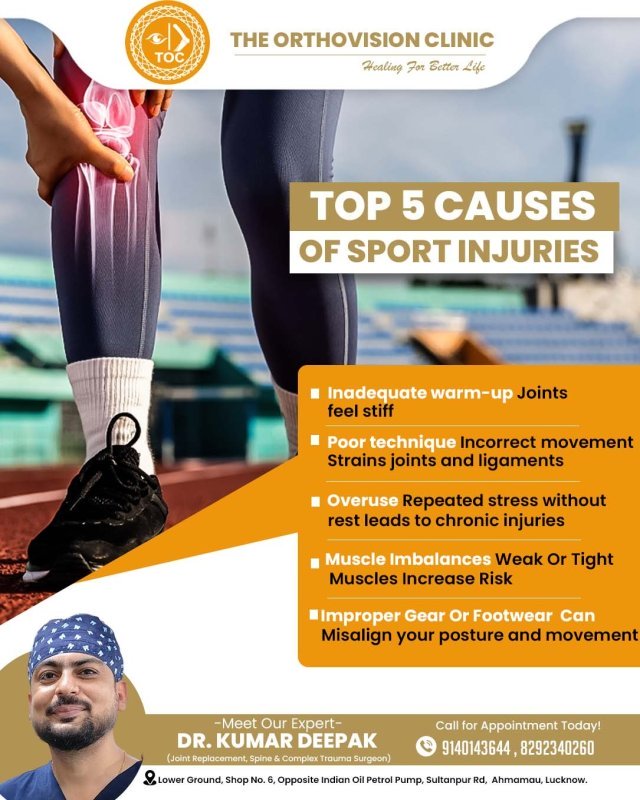
1. Inadequate Warm-Up
Jumping into intense activity without warming up leaves muscles, tendons, and ligaments stiff and vulnerable. A proper warm-up increases blood flow and prepares joints for load.
- Spend 10 to 15 minutes on dynamic stretching and light cardio before sport
- Include sport-specific movement drills before full-intensity play
- Cool down and stretch after activity to aid recovery
2. Poor Technique
Incorrect form during running, lifting, cricket bowling, or gym exercises places abnormal stress on joints and soft tissues, increasing risk of sprains, tears, and stress fractures.
- Learn proper form from qualified coaches
- Avoid excessive load before mastering technique
- Correct foot strike, landing mechanics, and lifting posture
3. Overuse and Insufficient Rest
Training too hard or too often without recovery time leads to overuse injuries such as tendinitis, stress fractures, and shin splints. Rest days are part of training, not a break from it.
4. Muscle Imbalances
Weak hip, core, or hamstring muscles force the knee and ankle to compensate, raising injury risk. Balanced strength training protects joints during sport.
- Include strength work for quads, hamstrings, glutes, and core
- Address flexibility deficits in calves and hip flexors
- Single-leg balance exercises improve stability
5. Improper Gear and Playing Surfaces
Worn-out shoes, wrong footwear for the sport, or uneven playing surfaces contribute to ankle sprains, knee injuries, and falls. Replace gear on schedule and inspect fields or courts before play.
When to Seek Orthopaedic Care
Persistent pain, swelling, inability to bear weight, or joint instability after sport need prompt evaluation. Dr. Kumar Deepak at The OrthoVision Clinic, Lucknow, treats sports injuries from diagnosis through rehabilitation and surgery when required.
Frequently Asked Questions
How soon after a sports injury should I see a doctor?
Seek care immediately if you cannot bear weight, hear a pop at injury, have obvious deformity, or if pain and swelling do not improve within 48 to 72 hours.
Can I continue playing with mild pain?
Playing through pain often worsens tissue damage. Rest, ice, compression, and elevation (RICE) help acute injuries; persistent symptoms need professional assessment.
Does physiotherapy help prevent sports injuries?
Yes. Structured strengthening, flexibility work, and sport-specific conditioning significantly reduce injury rates in recreational and competitive athletes.