Kumar Deepak | 3 min read Your Clap has been added.
What is joint replacement surgery? According to Dr.
Key symptoms and patterns
Manuj Wadhwa, Director & Head, Max Elite Institute Of Orthopaedics & Joint Replacement, in joint replacement surgery, the abnormal bone and lining structures of the joint are removed surgically and new parts are inserted in their places.
These new parts may be made of special metal, plastic or specific kinds of ceramic-coated implants. The new parts allow the joints to move again with little or no pain.
The surgery can: Reduce joint pain Help in restoring or maintaining joint motion Improve the look and alignment of the joints Improve overall joint function What causes joint pain?
Common causes and risk factors
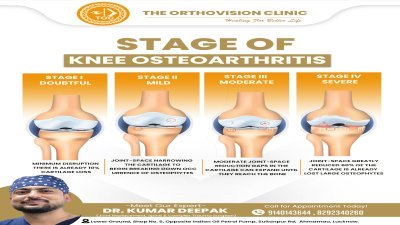
In a normal joint, bones have a smooth surface made of a substance called articular cartilage on their ends that allows one bone to glide against another easily. Joints are lubricated by a thin layer of fluid called synovial fluid that acts like oil in an engine to keep parts gliding smoothly.
When the articular cartilage wears, is damaged or the joint fluid is abnormal, the joints become stiff and painful, causing arthritis, which may be possible to treat with this surgery.
Common myths regarding joint replacement surgery Myth: Joint replacement surgery means a long hospital stay Fact: There have been big advancements in joint replacement surgery. It was normal to spend up to 10 days in the hospital after joint replacement surgery, but today the average is 3-4 days.
Diagnosis and evaluation
With improvements in technology and patient care, hospital stays are significantly shorter than before. Patients usually stay less than two days after top hip replacements and less than three days after knee replacements.
Myth: Joint replacement surgery is highly invasive Fact: The misconception is that some patients think that the entire knee is replaced in a knee replacement surgery but there’s only a minimal amount of bone that's taken before inserting the new parts.
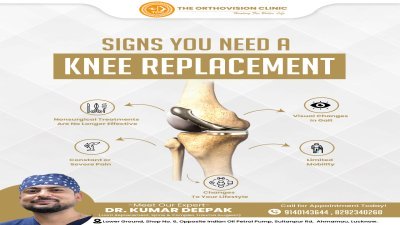
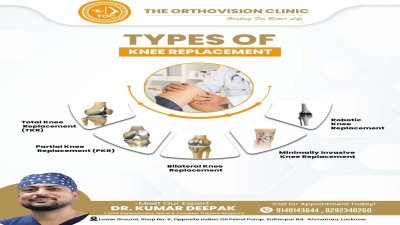
In knee replacement surgery, these parts consist of a metal cap for the femur, a metal base plate on the tibia and a piece of plastic in between, acting as cartilage. Surgeons today are also using less-invasive techniques and smaller incisions to perform replacements. It’s much less invasive than many people think.
Treatment and self-care
Myth: Replacement joints wear out in 10 years or less Fact: Due to improvements in materials and surgical techniques, today’s knee and hip replacements can last up to twice as long as comparable replacements done in the past. The quality components used have improved significantly.
Newer implant materials like verilast have been tested for 30 years wear performance and have US - FDA approval.
Myth: If you’re under 50, you’re too young to have a joint replaced Fact: Orthopaedic surgeons today do not classify a specific age to determine whether a patient is a good candidate for a hip or knee replacement surgery. Instead, the decision depends on the levels of disability and pain the patient is experiencing.
Consult Dr. Kumar Deepak in Lucknow
Persistent joint, bone, or muscle symptoms deserve a structured evaluation rather than repeated self-treatment alone.
Dr. Kumar Deepak — M.S. Ortho (Gold Medalist), F.I.J.R | ASAMI | AO Trauma — consults at The OrthoVision Clinic and Remedy Medicity, Lucknow. Call to book an appointment and discuss a plan suited to your activity level.
Frequently Asked Questions
When should I see an orthopaedic specialist instead of waiting?
Seek review if pain lasts more than a few weeks, disturbs sleep, causes limping, or limits work and daily tasks despite rest and simple measures.
Does this information replace an in-person examination?
No. Online guides help you understand options, but diagnosis depends on clinical examination and investigations tailored to your case.
Where can I get orthopaedic care in Lucknow?
Dr. Kumar Deepak sees patients at The OrthoVision Clinic (Ahmamau, Sultanpur Road) and Remedy Medicity, Lucknow.