
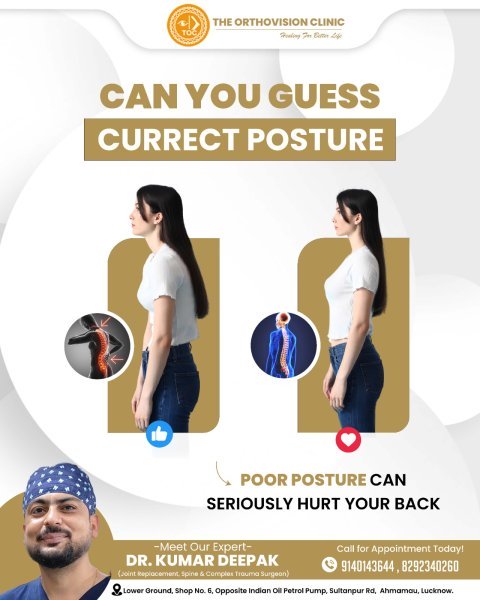
Back pain is one of the most common reasons people visit an orthopaedic clinic in Lucknow. While injuries and arthritis play a role, poor posture is a frequent and preventable contributor to neck, upper back, and lower back discomfort.
Slouching vs Upright Posture
Slouching forward rounds the shoulders, flattens the lower back curve, and shifts the head ahead of the spine. This posture increases load on spinal discs, ligaments, and paraspinal muscles. Upright alignment keeps the ears over the shoulders, shoulders over the hips, and maintains the natural curves of the spine.
How Poor Posture Strains the Spine
Sustained poor posture creates uneven pressure on intervertebral discs and facet joints. Over months and years, this can lead to muscle fatigue, disc degeneration, nerve irritation, and chronic ache — especially in desk workers and smartphone users.
- Forward head posture increases neck and upper back strain
- Prolonged sitting with a rounded lower back stresses lumbar discs
- Standing with locked knees or swayback alters spinal alignment
- Heavy bags on one shoulder create asymmetric spinal load
Practical Posture Tips
- Keep computer screens at eye level and feet flat on the floor
- Take standing or walking breaks every 30 to 45 minutes
- Use a chair with lumbar support or a small cushion behind the lower back
- Sleep on a supportive mattress with a pillow that keeps the neck neutral
- Strengthen core and back muscles with guided physiotherapy
- Avoid prolonged phone use with the head bent downward
When Back Pain Needs Medical Attention
See an orthopaedic specialist if back pain persists beyond a few weeks, radiates to the leg, causes numbness or weakness, follows a fall or injury, or wakes you at night. Dr. Kumar Deepak at The OrthoVision Clinic, Lucknow, evaluates spinal and musculoskeletal causes and recommends targeted treatment.
Frequently Asked Questions
Can fixing posture alone cure back pain?
Posture correction helps many patients, especially when pain is posture-related. Persistent or severe pain may need imaging, physiotherapy, or other treatment beyond posture changes alone.
Is standing better than sitting for back health?
Neither position is ideal for hours without movement. Alternating between sitting, standing, and walking with good alignment is best for spinal health.
Do posture braces help?
Braces may provide temporary reminder support but should not replace muscle strengthening and ergonomic adjustments. Long-term reliance on braces can weaken postural muscles.