What is Arthritis? Arthritis is a medical condition characterised by inflammation and stiffness of the joints.
Affecting millions of people worldwide, it is a leading cause of disability and can impact individuals of all ages, genders, and backgrounds. As the disorder worsens with age, early diagnosis and management are crucial for mitigating its progression and enhancing the quality of life for affected individuals.
Key symptoms and patterns
Moreover, it is also associated with 120 different diseases that can affect muscles, joints and other tissues. Let’s delve deeper. What are the different types of arthritis? Arthritis is a broad term used for various types of joint inflammation and conditions, out of which two are the most common.
These are: Osteoarthritis (OA) Primarily caused by the wear and tear of joints over time, Osteoarthritis (OA) is a degenerative joint disease that commonly occurs as people age.
Characterised by the breakdown of cartilage in the joints, leading to pain, stiffness, and reduced mobility, OA is the most prevalent form of arthritis and can affect any joint in the body.
Common causes and risk factors
Rheumatoid Arthritis (RA) RA is an autoimmune disorder, wherein the body's immune system mistakenly attacks the lining of the membranes surrounding the joints (called synovium).
It often affects multiple joints at the same time, and besides causing chronic inflammation, pain, joint damage, it can also lead to joint deformity and disability. Other Types of Arthritis Psoriatic Arthritis: This type of arthritis commonly occurs in people who have the skin condition, psoriasis.
Ankylosing Spondylitis: Ankylosing spondylitis primarily affects the spine and can cause inflammation and fusion of the vertebrae. It can also involve other joints and cause stiffness and pain.
Diagnosis and evaluation
Gout: Gout is characterised by the buildup of uric acid crystals in the joints, leading to sudden and severe pain, swelling, and inflammation, often in the big toe.
Juvenile Idiopathic Arthritis (JIA): Juvenile Idiopathic Arthritis (JIA) is a group of arthritis conditions that affect children and adolescents and includes several subtypes, each with distinct characteristics. What are the Stages of Arthritis?
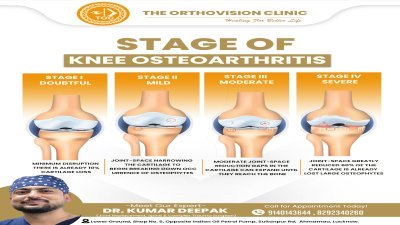
As the specific stages can vary depending on the type of arthritis, here is a general overview of the stages commonly seen in Osteoarthritis (OA) - the most prevalent form of arthritis: Stage 1: Normal or Preclinical Stage In this initial stage, there are no clinical symptoms, and joint function is normal.
X-rays may show no visible signs of joint damage
X-rays may show no visible signs of joint damage. However, underlying changes, such as cartilage thinning or minor injuries, may begin. Stage 2: Mild Arthritis (Mild Joint Space Narrowing) In this stage, there may be mild joint discomfort, stiffness, or occasional pain, especially after physical activity.
X-rays may reveal minor joint space narrowing or the development of small bone spurs (osteophytes). Early signs of cartilage damage become apparent. Stage 3: Moderate Arthritis (Moderate Joint Space Narrowing) This stage is characterised by increased joint pain, stiffness, and reduced joint function.
X-rays show moderate joint space narrowing, significant osteophyte formation, and potentially more noticeable cartilage loss. Daily activities may become more challenging.
Consult Dr. Kumar Deepak in Lucknow
Persistent joint, bone, or muscle symptoms deserve a structured evaluation rather than repeated self-treatment alone.
Dr. Kumar Deepak — M.S. Ortho (Gold Medalist), F.I.J.R | ASAMI | AO Trauma — consults at The OrthoVision Clinic and Remedy Medicity, Lucknow. Call to book an appointment and discuss a plan suited to your activity level.
Frequently Asked Questions
When should I see an orthopaedic specialist instead of waiting?
Seek review if pain lasts more than a few weeks, disturbs sleep, causes limping, or limits work and daily tasks despite rest and simple measures.
Does this information replace an in-person examination?
No. Online guides help you understand options, but diagnosis depends on clinical examination and investigations tailored to your case.
Where can I get orthopaedic care in Lucknow?
Dr. Kumar Deepak sees patients at The OrthoVision Clinic (Ahmamau, Sultanpur Road) and Remedy Medicity, Lucknow.